EDUCATION
CHAIR | BRAD BERGER
Some of us may feel that learning stops at the end of our formal education but thank goodness this is not the case! The goal of the Education committee is to provide information regarding the current state of our lakes and how to keep them healthy for future generations.
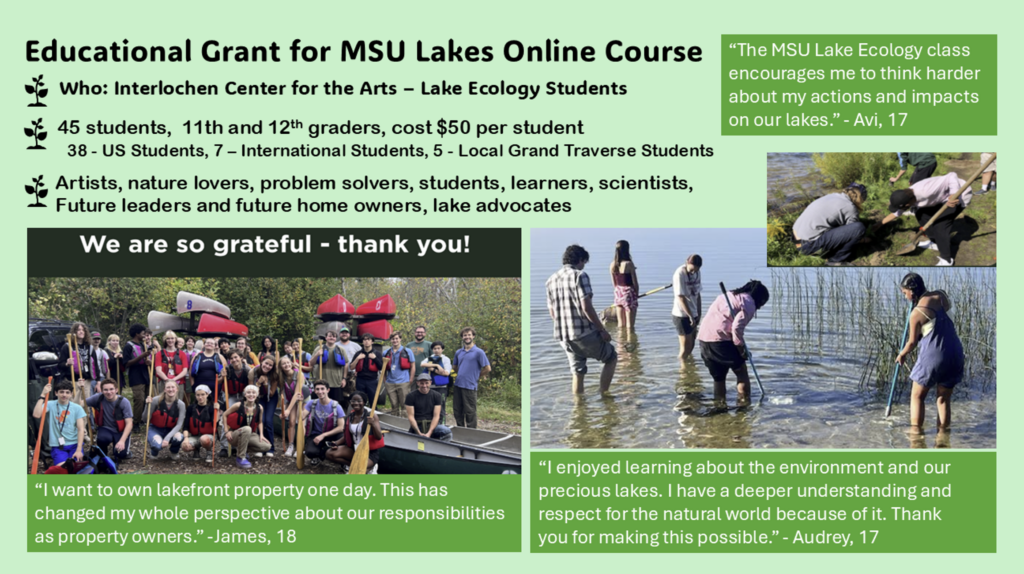
Every year, MSU provides a very good online course about inland lakes. LLA discussed ways that we could spread the word to a broader group and extend our messaging to a younger generation. LLA was able to reach a special arrangement with MSU to offer the “Introduction to Lakes Online” course to forty-five high school students at Interlochen Center for the Arts. The students were participating in an existing Interlochen curriculum that was a natural fit for the Lakes Online course. A few LLA Board members also took this course. Along with other topics, we learned the importance of shoreline management, of wetlands, and of using native species when planting. The offering was a substantial success with many enthusiastic comments returned to LLA from the students and their teacher.
LAKE STUDIES
Lake Science
To study and monitor water quality and level and to observe and report problems of pollution, soil and bank erosion, etc. This work is carried out by NMC summer interns in the Fresh Water Sciences program. Annual reports of lake measurements: phosphorus, nitrogen, and dissolved oxygen are stored on this page.
Lake Facts
Interesting facts and history of the lakes in the Long Lake Watershed including a map.
- Surface Area | 4.5 square miles
- Shoreline | 88,272 feet
- Islands | 5
- Spring Fed
Water Quality
What residents can do to keep the water quality as pure as can be in the Long Lake Watershed. Topics include:
- Water Pollution
- Lawn Fertilization
- Septic System Maintenance
- Reduce Home Water Use
Water Levels
Many of us were concerned about the abnormally low water level on Long, Mickey and Ruth lakes last fall. We had trouble navigating through shallower channels, water levels beside our docks were not sufficient, and stretches of newly exposed beach appeared in areas that were previously below water.
Zebra and Quagga Mussels
Before 2020, we had very few findings of Zebra Mussels in Long Lake. Based on reports from LLA members, 2021 showed a significant increase in Zebra Mussel findings.
INVASIVE PLANTS
Please contact the Long Lake Association if you see any of the following invasive species on the lake. It’s best to prevent these from entering our eco system however, sometimes it is unavoidable. Catching these invasive species early saves hundreds of dollars in remedies and prevents wide spread.
FLOATING PLANTS
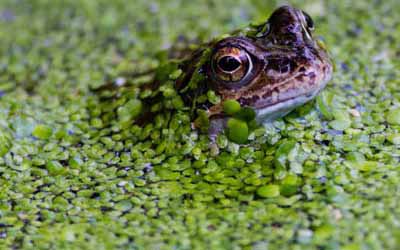
Floating on Water | There are many plants that float in the water. This category includes both algae and higher plants, free-floating and rooted plants. Floating plants can dominate the water surface and create problems for the ecosystem and users alike. Unlike emergent plants, Floating Plants require some level of standing water. These plants provide essential habitat and food for many aquatic organisms.
SHORELINE PLANTS
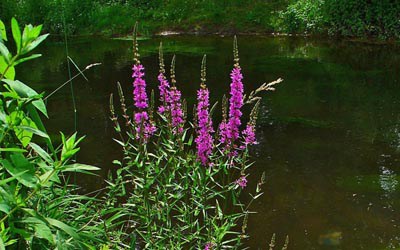
On the Shoreline | Commonly called Emergent Plants these plants start growing under the water. They quickly break the water surface and mature with most of the plant above the water. These plants prefer standing water but are tolerant of fluctuating moisture and periods of drought. These plants provide essential habitat and food for many aquatic organisms.
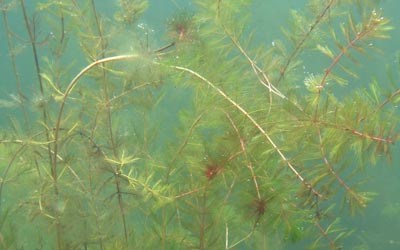
UNDERWATER PLANTS
Underwater | Submerged plants, or plants that grow underwater, are tolerant of fluctuating water levels but require some standing water for every stage of their life cycle. These plants spend almost all of their life cycle under the water surface. The most common exceptions are the plants grow flowering parts above the water surface. The plants provide essential food and habitat to other aquatic organisms. Submerged plants also play a vital role in nutrient recycling, sediment stabilization, and erosion control.
OTHER CONCERNS
Aquatic Hitchhikers
Great Lakes Basin waterways have been beset by invasive, non-native species. Common hitchhikers include purple loose strife, zebra mussels, Eurasian watermilfoil, hydrilla, whirling disease, spiny water fleas, round gobies and water hyacinth.
Swimmers Itch Study
A skin irritation, commonly known as swimmers itch, may affect people, to varying degrees, after swimming in certain Michigan lakes. In an attempt to better understand and try to control swimmers itch, a partnership, the Michigan Swimmers Itch Partnership or MISIP, has been formed by many area lake associations, including Long Lake.
Erosion Control
Our shorelines are sensitive to severe weather and boat wake action that can cause erosion damage. Picnic Island continues to have erosion issues and is being monitored for further work and plantings to stop erosion.